At Hopewell Foundation, we believe that awareness about your health is the most powerful medicine. Whether it is about the gradual progression of Chronic Kidney Disease (CKD) or sudden challenges, including kidney stones or acute kidney injury, understanding the conditions is the first step toward treatment and life-saving care. Just have a look at the kidney diseases mentioned, their causes, symptoms, and preventive measures. These understandings will help individuals and families care for patients and those vulnerable to disease.
Chronic kidney disease is a serious condition in which your kidneys do not work properly and are starting to lose their function. Our kidneys play a crucial role in filtering out the wastes, toxins, and extra water from the blood. They also take part in red blood cells and bone health. With Chronic kidney disease, they fail to perform these functions. There are five stages of chronic kidney disease:
At stage 1, the kidneys work well, but the signs of mild kidney damage are felt.
At this stage, the kidneys work well, but milder signs of kidney damage are felt.
This stage shows mild to moderate symptoms, and the kidneys do not work properly. This is considered the most common stage wahere you notice several symptoms. With the right treatment plan, this stage can be recovered and never advance to the fourth stage.
At this stage, the kidneys are severely damaged and are unable to perform their functions.
At this stage, the kidneys are close to failure. This stage requires kidney dialysis or transplant.
At the early stages of chronic kidney disease, people do not experience prominent symptoms. As the disease worsens, the following symptoms may appear:
Whenever you experience such symptoms or issues, you must visit your healthcare professionals to diagnose the condition. Remember that early detection or diagnosis can help you stop the conditions from worsening.
Chronic kidney disease can be diagnosed in several ways. The screening procedure depends on the symptoms or conditions. Usually, the condition is diagnosed through blood test, urine test, and biopsy (kidney tissue test):
Blood test, also known as estimated glomerular filtration rate (eGFR), is taken to check how well your kidneys filter or clean your blood.
Urine test is known as urine albumin-creatinine ratio (uACR), and is taken to check if your kidneys are leaking protein into your urine.
A biopsy is taken when blood test, urine test, and other examinations fail to show your kidney conditions. In this procedure, a small portion of kidney tissue is taken and examined under a microscope to evaluate the exact condition of the kidneys.

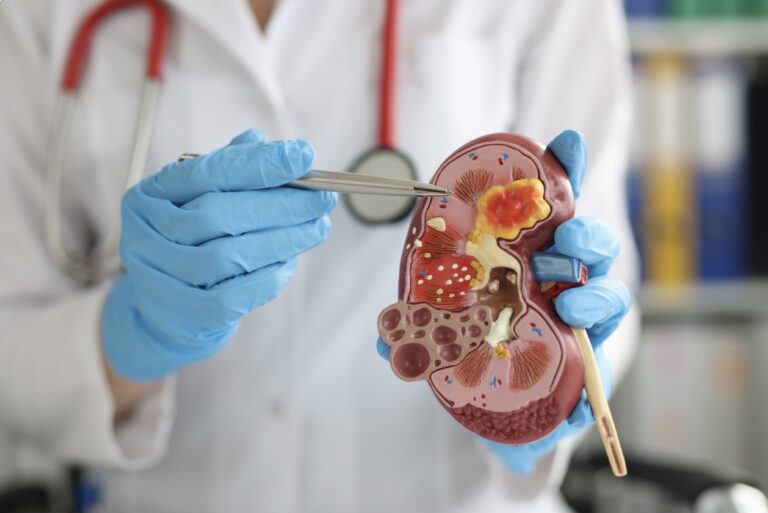
Below are the common causes of chronic kidney disease. Understanding these causes can help people detect and prevent the disease before it worsens:
If you have already been suffering from any of these problems, you are more prone to develop chronic kidney disease. Ensure you address the problems carefully and treat the conditions accordingly to prevent them from advancing into serious conditions.
At the beginning, healthcare professionals recommend certain medications, depending on your condition. Healthcare professionals or nephrologists recommend several medications for chronic kidney disease:
For serious conditions or stage 5 chronic kidney disease, dialysis is the only treatment plan. Dialysis is a medical treatment that performs the essential functions your kidneys fail to perform. Dialysis is performed for a variety of purposes, including waste removal, fluid management, balancing electrolytes, and acid-base balance. Generally, there are two types of dialysis, including hemodialysis and peritoneal dialysis:
In hemodialysis, blood is filtered outside the body through a machine (dialyzer). It requires two to three sessions a week.
This process requires placing a special fluid in the abdomen to filter waste from the blood vessels.
The common saying of “prevention is better than cure” also applies to your kidney health. When you experience mild symptoms, do not ignore them and visit your healthcare professionals or nephrologists immediately. Try to modify your lifestyle and follow the instructions proposed by healthcare professionals. However, below are preventive measures suggested by professionals to avoid kidney problems:
There are several other kidney diseases that have been found today. Whenever you feel pain and other symptoms discussed above, you must not ignore them and visit your healthcare professionals immediately. Remember that early diagnosis can help you discover the problem and create treatment plans accordingly. Otherwise, any delay may lead to serious conditions, such as chronic kidney disease.
Several other kidney diseases have been diagnosed that can damage your kidneys and may lead to serious conditions when not treated properly:
It happens due to the growth of malignant cells in the kidney tissues. It causes blood in the urine. Quite smoking and maintaining a healthy body weight can prevent kidney cancer.
This is a painful condition caused by bacteria. Kidney infections usually result in fever and back pain. It can be treated by drinking plenty of water and practicing good hygiene.
Kidney stones result from concentrated urine. Stones are caused by dehydration and a bad diet habit, and result in sharp and severe pain in the Kindeys. Kidney stones can be avoided by staying hydrated and reducing excessive salt intake.
These are fluid-filled sacs formed within the kidneys due to ageing. Kidney cysts are usually symptomless, and you feel symptoms when they grow large.
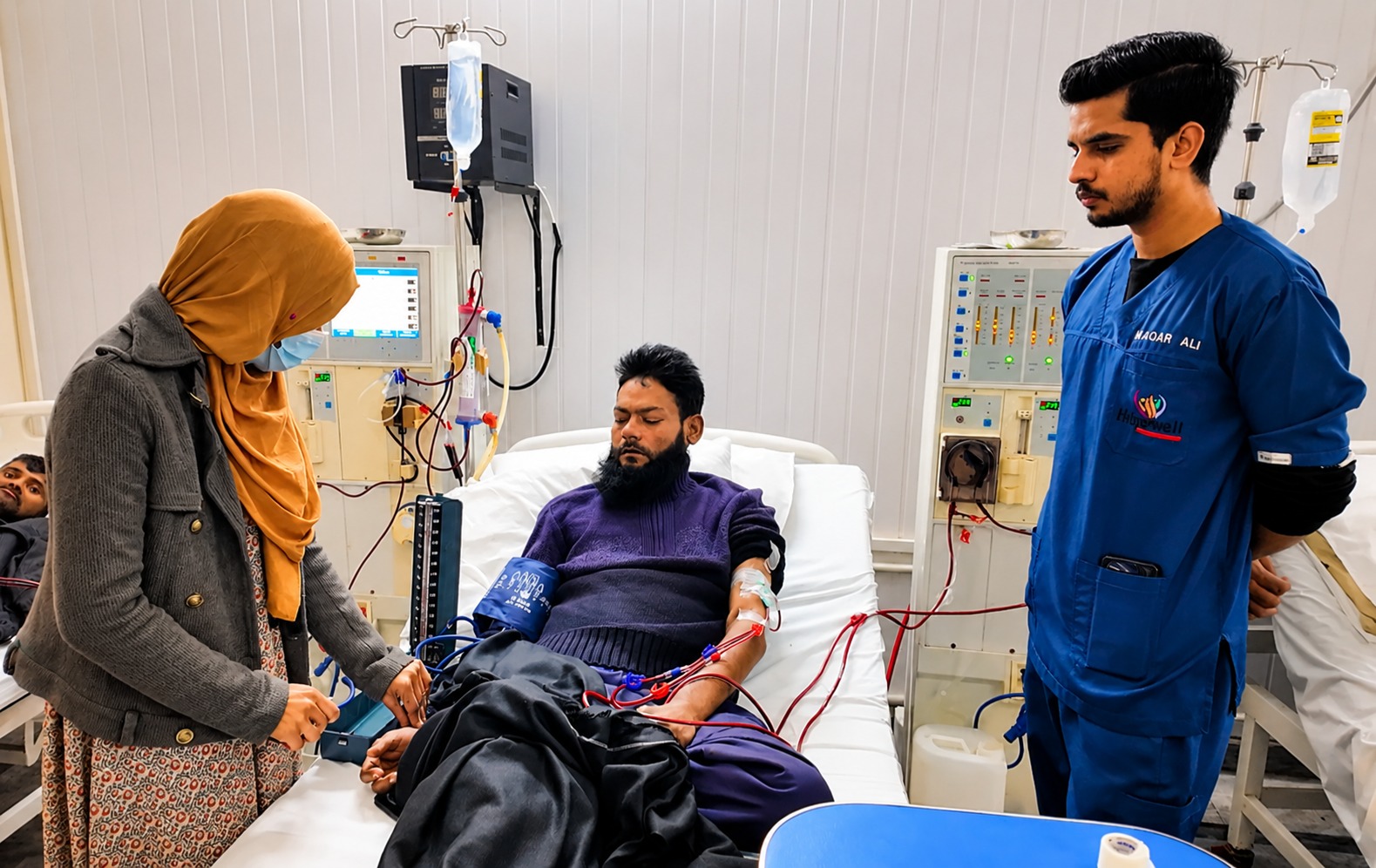
Hopewell Foundation is a registered organization working to provide free dialysis sessions and medications to poor kidney patients. We are located in Gilberg, Lahore, and facilitate hundreds of kidney patients daily. Besides this, we are also taking part in facilitating deserving people with free healthcare programs, education support, food security initiatives, hunger relief programs, women’s empowerment, and youth leadership programs.
Give your donations to Hopewell Foundation and support kidney patients and other deserving people who are deprived of the basic needs of their lives. You can send your Zakat, Fitrana, Sadaqah, and other regular charity to Hopewell Foundation. Your donations are used to provide dialysis patients with proper medications, dialysis sessions, and other treatments. Besides this, we also use your donations to sponsor education, food, and other programs to deserving people across Pakistan.
Chronic Kidney Disease (CKD) develops gradually, and high blood pressure and diabetes (type 1 and 2) are the common causes of developing chronic kidney disease.
No symptoms appear at the initial stages of chronic kidney disease. However, in the growing stages, you may feel low energy level, tiredness, weakness, visible swelling, difficulty in breathing, high blood pressure, vomiting, etc. You may also feel other symptoms based on the kidney damage.
Generally, blood and urine tests are taken to diagnose chronic kidney disease. However, when blood and urine tests fail to show results, healthcare professionals recommend a biopsy (kidney tissue test) to diagnose the condition more deeply.
At Hopewell Foundation, we provide patients with free consultation, medication, and dialysis sessions. We perform hundreds of dialysis sessions for those who really deserve or cannot afford their treatment.
Both hemodialysis and peritoneal dialysis are dialysis treatments for patients suffering from chronic kidney disease or kidney failure. In hemodialysis, an artificial kidney or dialyzer is used to filter out wastes from your blood. However, in peritoneal dialysis, a fluid is placed in the abdomen to eliminate wastes from the blood vessels.


Hopewell Foundation – Copyright 2026
 By NKU Technologies.
Hopewell
Typically replies within minutes
Any questions?
WhatsApp Us
Online | Privacy policy
WhatsApp us