Calculate your annual Zakat obligation based on your total assets. Zakat is 2.5% of your net wealth above the Nisab threshold held for one lunar year.
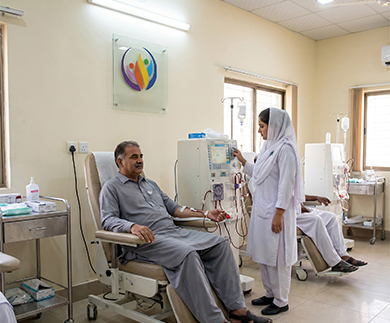
May Allah accept your Zakat. Donate to Hopewell Foundation and provide free dialysis care to kidney patients who cannot afford treatment.
Donate Now →Your net wealth is below the Nisab threshold (Silver basis), so Zakat is not obligatory for you this year. However, voluntary Sadaqah is always encouraged and greatly appreciated.
* Nisab values are approximate based on current market rates. Silver Nisab is based on 612.36g of silver (~PKR 180,000). Gold Nisab is based on 87.48g of gold (~PKR 1,650,000). Please consult a qualified Islamic scholar for a precise ruling.


Whether you are eligible to pay Zakat or not, understanding Zakat is necessary for everyone. Here we come with the basics of Zakat, as it will help you clear the basic concepts regarding Zakat.
Zakat is an obligatory form of Charity in Islam. It is required to pay once in a lunar calendar by eligible Muslims only. It is one of the five pillars of Islam and is mandatory to pay for those who meet the Nisab or criteria. Muslims can pay Zakat anytime of the year; however, many Muslims pay it during Ramadan as it multiplies the rewards.
Nisab is considered the minimum amount of wealth that makes you eligible for Zakat. If your minimum wealth meets or exceeds the Nisab, you are required to pay Zakat, which is 2.5% of your total wealth. The Zakat nisab based on silver and gold is:
Follow the given steps to calculate your Zakat:
Check if you meet the Zakat nisab or not
If you meet the nisab, collect all of your assets. These include silver, gold, cash in hand, bank savings, business inventory, or any other investment you have made.
Exclude liabilities or debts if you have any. These can be due bills, loan payments, and short-term debts.
Calculate 2.5% of your total amount, and this is your payable zakat


Hopewell Foundation provides users with an easy-to-use Zakat calculator that helps you calculate the exact payable amount without any confusion:
Besides meeting Zakat Nisab, one must also meet other requirements to be eligible for Zakat:


Zakah expenditures are only for the poor and for the needy and for those employed to collect [zakah] and for bringing hearts together [for Islam] and for freeing captives [or slaves] and for those in debt and for the cause of Allah and for the [stranded] traveler – an obligation [imposed] by Allah. And Allah is Knowing and Wise.” (Qur’an, 9:60)
According to this narration, people in the following categories are eligible to receive Zakat:
Al Fuqara are those with little or no income source. You can give Zakat to them and help them to fulfill their basic needs.
Al Masakin are those who are poor to such an extent who cannot afford their living expenses. Your Zakat can help them manage their basic living needs.
If you find someone who has converted to Islam and is going through financial hardship, you can offer them Zakat to lessen their burdens.
If you find someone who is in debt and does not have enough resources to get rid of the debt, you can offer them Zakat to pay their debt.
If you find someone in severe oppression and captivity, you can pay them Zakat to free them.
People who work in the Zakat department and distribute Zakat fairly among needy and deserving people can also receive Zakat money.
Zakat can also be given to people who are struggling and fighting purely for the cause of Allah. If you find someone under such conditions, support them by giving your Zakat.
If you find someone as a stranded traveler who does not have enough resources to get back to their home, you can support them by giving your Zakat. They can receive Zakat at the moment to fulfill their needs, even if they are rich in their home.
Eligible Muslims are required to pay Zakat once in a lunar year. They can pay it at any time of the year. However, many Muslims intentionally pay Zakat during Ramadan as it helps the poor to spend Ramadan and Eid with joy. As well as this, paying Zakat in Ramadan comes with multiple rewards for the Zakat payers.
Zakat Nisab is the set amount that makes Muslims eligible to pay Zakat. It is usually calculated based on gold and silver. For gold, the Zakat Nisab is 7.5 tola gold or 87.48 grams, and for silver, it is set to 52.5 tola or 612.36 grams of silver.
Paying Zakat is not based on your current income or salary. If you have wealth equal to or above the Nisab (87.48 grams of gold or 612.36 grams of silver), you need to pay Zakat.
People under certain conditions, including the poor, the debt-ridden, and the slaves, are exempted from Zakat. Besides this, underage children are also exempt from giving Zakat.
Yes, you are allowed to split the Zakat amount among different individuals. However, you need to ensure that all the recipients are eligible to receive Zakat.


Hopewell Foundation – Copyright 2026